Redundancy Is Not Paranoia

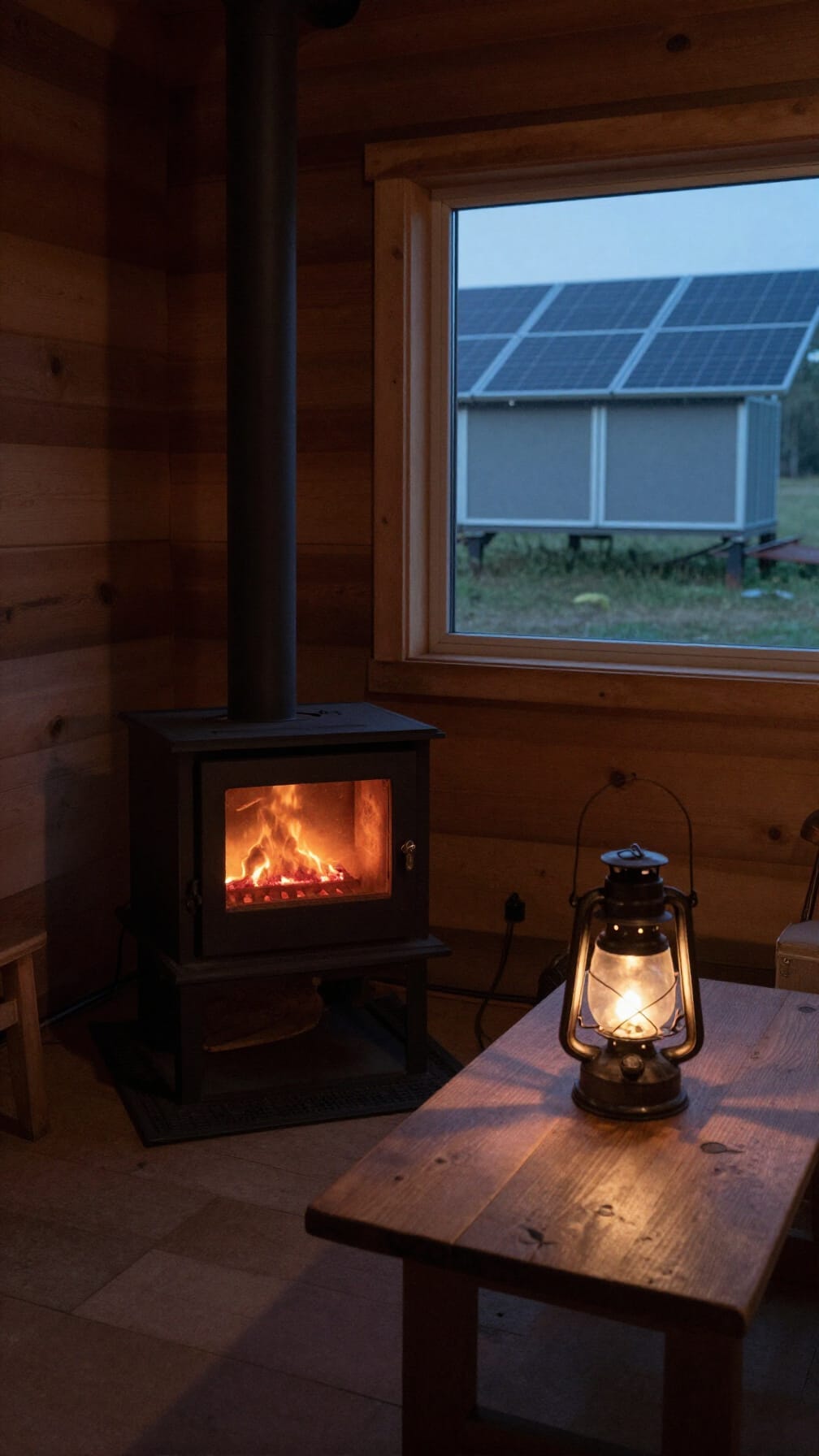
There’s a word that tends to make people uncomfortable.
Redundancy.
It gets lumped in with fear. With pessimism. With the assumption that you’re expecting something to go wrong at any moment.
That if you keep a second option around, you must be bracing for collapse.
But that isn’t how redundancy feels in practice.
It feels calm.
In fact, the absence of redundancy is what feels anxious… once you start paying attention.
Modern life quietly teaches us to tolerate single points of failure. One power source. One water supply. One payment method. One route to everything. When it works, it feels wonderfully efficient. When it doesn’t, everything grinds to a halt at once.
And that’s the strange part. We call that normal.
Here at the cabin, redundancy isn’t dramatic. It doesn’t involve stockpiles or checklists pinned to the wall. It’s simply layered thinking.
If the power drops, there’s still light. If the pump fails, there’s still water. If fuel becomes scarce or expensive, we haven’t designed our days around constant movement. If a supply run can’t happen this week, nothing urgent unravels.
None of this is driven by fear.
It’s driven by experience.
Weather shifts. Infrastructure ages. Systems strain. None of that is radical. It’s the baseline condition of reality. What’s radical is designing a life that assumes uninterrupted service forever.
For most of human history, redundancy wasn’t optional. You didn’t have one way to cook food. You didn’t rely on a single harvest, a single tool, a single source of warmth. You layered solutions because life demanded it.
Somewhere along the way, we replaced that with efficiency.
Efficiency looks good on paper. It’s tidy. It optimises. It strips away overlap because overlap appears wasteful. But overlap is where resilience lives. Remove it, and you gain speed… right up until you don’t.
Redundancy slows nothing down in daily life. What it does is remove the low-level hum of vulnerability that modern living normalises.
The quiet calculation of:
What if the app’s down?
What if the card reader fails?
What if the delivery doesn’t arrive?
You don’t notice that tension until it’s gone.
That’s the part people misunderstand. Redundancy doesn’t make you hyper-aware of disaster. It does the opposite. It lets you stop thinking about it entirely.
When there’s a backup, the mind relaxes.
This applies far beyond utilities. Skills are redundancy. Knowing how to cook without relying on pre-made ingredients is redundancy. Understanding basic repairs is redundancy. Familiarity with your environment is redundancy.
None of it is glamorous.
None of it performs well online.
And that’s probably why it gets mislabelled as paranoia. It doesn’t announce itself. It doesn’t signal virtue. It simply works, quietly, in the background.
We still use modern systems. We’re not rejecting them. We’re just not asking them to be flawless.
Redundancy isn’t about expecting failure.
It’s about accepting that things wobble… and designing your life so a wobble doesn’t become a crisis.
That’s not pessimism.
That’s respect.
Respect for systems.
Respect for limits.
Respect for the fact that humans have always lived best when there was more than one way forward.
Redundancy isn’t panic.
It’s courtesy… extended to your future self.
Editor’s Note
Redundancy, like most of what we explore here, isn’t about predicting disaster.
It’s about attention.
About noticing where life has quietly narrowed itself to single options, single assumptions, single points of failure… and widening them again, deliberately.
There’s an old saying that gets passed around in blunt terms: fail to plan, plan to fail. Taken literally, it sounds harsh. Almost accusatory. But lived quietly, it means something softer.
It means choosing not to drift.
It means recognising that intention is often the difference between inconvenience and crisis… and that a little forethought, applied calmly, is one of the oldest forms of self-respect there is.
Nothing here is about fear.
It’s about paying attention early enough that fear never needs to arrive.

💌 Until Next Time
From my cabin to yours, may your shelves be full, your jars lined with colour, and your heart warmed by the knowledge that you’re walking in the footsteps of generations who knew the value of saving for the season ahead.
So, what are your thoughts?
Until Next Time

As we wrap up this edition of the Off-Grid Cabin newsletter, we’d love to hear from you! Your experiences, hints, and tips are invaluable to our community. Whether you’ve recently tried a new sustainable practice, discovered a fantastic resource, or have a tried-and-true method for living Off-Grid, please share your insights with us!

We encourage you to hit the button below and join the conversation! Your ideas could inspire fellow readers and make a positive impact on someone’s journey toward a more sustainable lifestyle.
And if you enjoyed this newsletter, don’t keep it to yourself! Please share it with friends, family, or anyone interested in embracing an Off-Grid lifestyle. Let’s spread the knowledge and empower others to join us in this amazing adventure!
Thank you for being a part of our community. We can’t wait to hear from you! Happy living Off-Grid! 🌿✨
Message Dominus Owen Markham
PLEASE SHARE THIS NEWSLETTER FAR AND WIDE,
I intend to keep the subscription fully FREE for as long as possible!
Join me as a supporter and member with a real-life couple off-grid in Sweden:

Some of my other newsletters: